Kia Tasman 2025 review and off road test of new dual cab ute challenger
If there’s a single vehicle category that continues to dominate Australia’s rugged terrain and its sales charts, it’s the unbeatable dual-cab ute. With names like Ford Ranger, Toyota Hilux, and Isuzu D-Max reigning supreme, breaking through this tough crowd is no small feat. But the 2025 Kia Tasman arrives with a bold ambition—to disrupt and carve a legacy of its own. This highly anticipated offering from Kia has finally been previewed in depth by Chris Thompson of CarsGuide in his latest off-road review, setting the stage for what may well be a game-changer in the segment.
From powerful performance specs to smart utility features, and from off-road readiness to lifestyle adaptability, the Kia Tasman 2025 has its eyes set firmly on both tradies and adventurers alike. But does it deliver where it counts? Let’s take a deep dive into everything you need to know about this upcoming ute.
Design and Styling: Bold Moves with Broad Shoulders
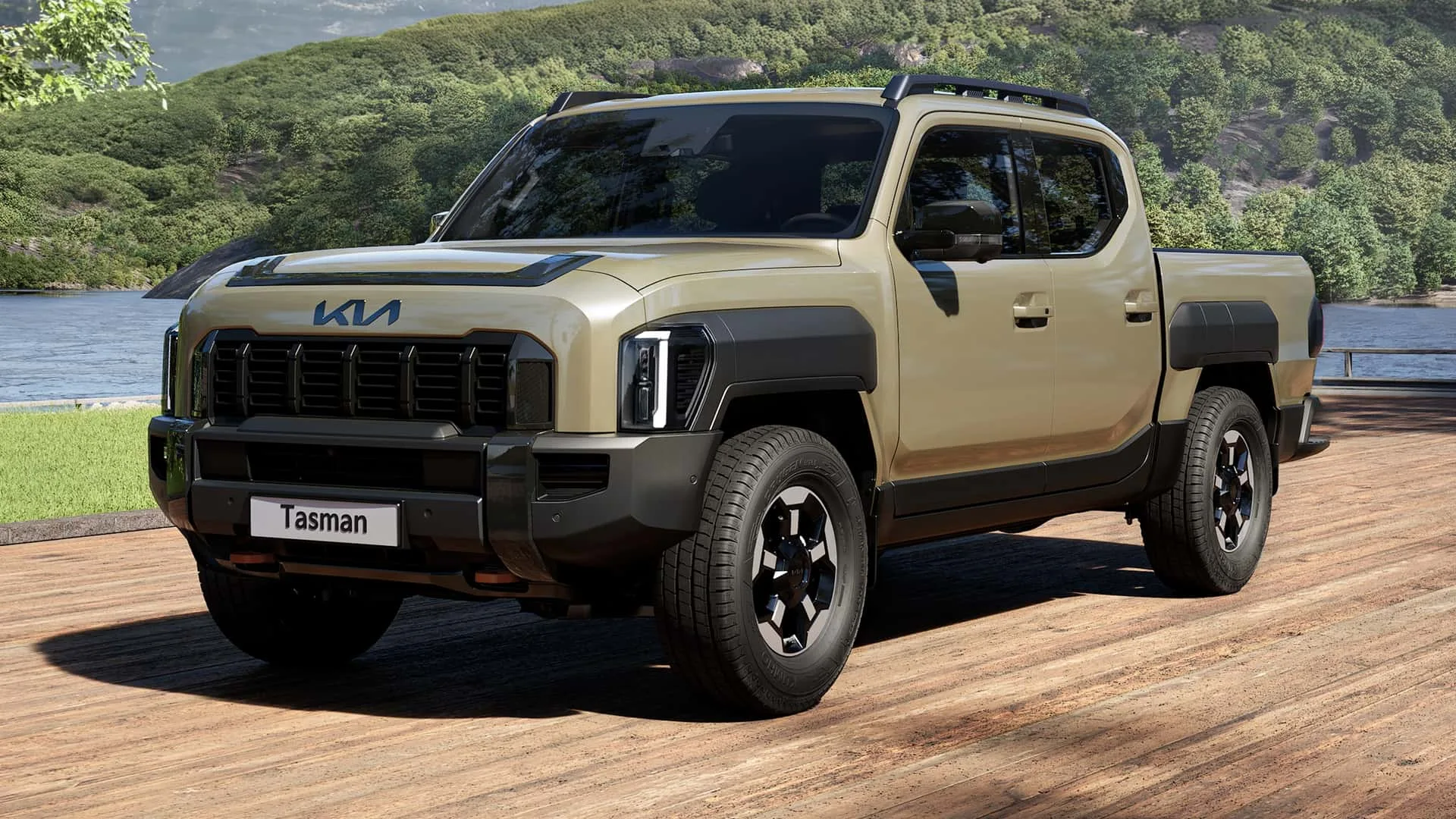
The Kia Tasman makes an emphatic first impression. True to its Korean design language, but tailored for Australian sensibilities, the Tasman sports a muscular stance and a head-turning, contemporary front end.
- Front Fascia: A bold grille reminiscent of Kia’s EV9, framed by aggressive LED headlights and squared-off bumpers.
- Proportions: Long wheelbase, sculpted body lines, and flared wheel arches, giving it a robust and balanced look.
- Cargo Bed: Practical and tough, with high sidewalls to maximize capacity while maintaining visual aggressiveness.
Kia pulled inspiration from the Australian wilderness when shaping the Tasman, aiming to match rugged ambition with modern sophistication. The result? A ute that’s not just functional—it’s stylishly purposeful.
Performance and Powertrain: Torque Where It Matters
While official technical specifications are still under embargo, preliminary information from test drives and insider comments offer crucial insights into how the Tasman performs.
Engine Options (Expected)
- Standard Engine: A 2.2-litre four-cylinder turbo-diesel, likely adapted from the Kia Sorento, tuned for torque delivery and towing capability.
- Transmission: An 8-speed automatic transmission, paired with either rear-wheel drive or optional dual-range four-wheel-drive configuration.
- Output Estimates: Around 150kW of power and 440Nm of torque—enough to compete solidly with rivals.
Expect Kia to offer multiple drivetrain configurations to cater to urban users, off-road adventurers, and worksite warriors alike.
Off-Road Performance
During CarsGuide’s off-road trials across rugged Australian bushland, the Tasman impressed with:
- Ground Clearance: Estimated at over 230mm, sufficient for serious off-road work.
- Suspension Setup: Multi-link rear suspension aimed at balancing load-hauling and ride comfort.
- Drive Modes: All-terrain programs supporting gravel, sand, mud, and rock scenarios.
Combined with low-range gearing and potential hill descent control, the Tasman is more than just country-road capable—it’s bush-ready.
Interior Comfort: Built for Work and Weekend
One area where Kia could gain a strategic advantage is inside the cabin. The Tasman’s interior channels premium SUV-level fit and finish into a utilitarian platform.
Key Cabin Features
- Material Quality: Hard-wearing surfaces in work models with deeper comfort and stitched leather in premium trims.
- Infotainment: A wide-format touchscreen (expected to be 12.3-inch), Apple CarPlay, Android Auto, and over-the-air software updates.
- Ergonomics: Smartly placed storage compartments, USB-C outlets, climate control zones, and wireless charging pads.
Thompson notes that even the prototype’s cabin setup suggests Kia is aiming to blend practical durability with modern comfort—something both fleet buyers and lifestyle ute lovers will appreciate.
Technology and Safety: Kia’s DNA in Full Effect
As with the brand’s recent crossovers and EVs, expect the Tasman to be stacked with advanced safety and driving technologies.
Projected Safety Features
- AEB (Autonomous Emergency Braking) with pedestrian and cyclist detection
- Adaptive Cruise Control with stop-and-go function
- Blind Spot Collision Avoidance with 360-degree camera
- Lane-Keeping and Lane-Follow Assist for highway driving
- Trailer Stability Assistance for towing scenarios
Kia has consistently scored well in ANCAP and Euro NCAP ratings, and we anticipate the Tasman will uphold this commitment, making it one of the most secure choices in its class.
Utility and Towing Capabilities: Serious Payload and Pulling Power
Utes live and die by their brawn, particularly when it comes to payload and towing. The Tasman doesn’t disappoint.
Estimated Towing and Load Ratings
- Braked Towing Capacity: Up to 3,500kg—benchmark territory
- Payload: Approaching 1,000kg, model dependent
- Load Bed Features: Multiple tie-down points, sprayed bedliner, optional 12V outlets
Whether you’re hauling timber between job sites or towing an off-road camper into the outback, the Tasman promises gritty workhorse potential.
Trim Levels and Pricing: Multiple Flavours for Diverse Buyers
While full pricing remains under wraps, Kia is known for competitive pricing and strong value-for-money propositions.
Expected Variants
- Entry Workhorse: Steel wheels, vinyl flooring, minimal tech—targeting fleets and trades
- Mid-tier Adventure Package: Alloy wheels, off-road tech suite, fabric interior
- High-end Luxury Spec: Leather interior, sunroof, Harman Kardon sound, full driver assist suite
Kia is rumoured to aim for price positioning between the Mitsubishi Triton and Ford Ranger, a strategic move that may lure budget-conscious buyers and even loyalists of more established brands.
Comparative Outlook: Tasman vs. The Titans
When stacked against current segment leaders, where could the Tasman slot in?
Tasman vs. Ford Ranger
- Ford Strength: Established architecture, wide service network
- Tasman Strength: Better infotainment, equal off-road prowess, potentially better pricing
Tasman vs. Toyota Hilux
- Toyota Strength: Reliability and resale value
- Tasman Strength: More modern tech and refined cabin, expected comfort edge
Tasman vs. Mitsubishi Triton
- Triton Strength: Competitive pricing and 10-year warranty
- Tasman Strength: Better engine refinement, more premium upper trims
Kia may not dethrone the giants right out of the gate, but it’s clearly entering the ring with gloves laced tight and head held high.
Conclusion: A Bold New Contender Rises
The 2025 Kia Tasman launches into one of the most competitive segments in Australia, but it appears well-equipped to take on the challenge. With a mix of off-road tenacity, refined cabin design, industry-standard towing credentials, and loaded safety tech, it offers real potential to meet—and exceed—market expectations.
For automotive dealers, the Tasman could represent a new revenue avenue as buyers crave novelty and better value. For consumers, it’s a rising star in a sky crowded with reliable, if not slightly stale, alternatives. The Tasman is evidence that Kia means business, not just in city cars, SUVs, or EVs, but now solidly in the realm of dual-cab diesel duty.
Want to sell, buy, or export your car? ENON Cars is simple and perfect for you! Join now and get three free ads as a new user. Post your ads easily and find buyers or sellers fast!